The Provision of Integrity: Jane Eyre and the Quiet Strength of Conscience
Welcome to The Founder’s Cultivated Library, a space where mothers read for restoration and wisdom.
When I first reopened Jane Eyre as an adult, I expected a love story. What I found instead was a story of conscience — of a woman learning to hold conviction and compassion in the same heart.
Charlotte Brontë’s heroine is not flawless or sentimental. She is steady. She learns what it means to live with integrity when every comfort could be won by compromise. As Elizabeth Gaskell once wrote, Jane Eyre is “a cry for the right of the individual soul.” That cry still rings true for women who are weary of performance and long to live by principle rather than pressure.
The Story: A Journey from Dependence to Discernment
Jane begins as an orphan with nothing but a fierce sense of right and wrong. She endures cruelty, hardship, and isolation, yet through each season she keeps hold of her moral center.
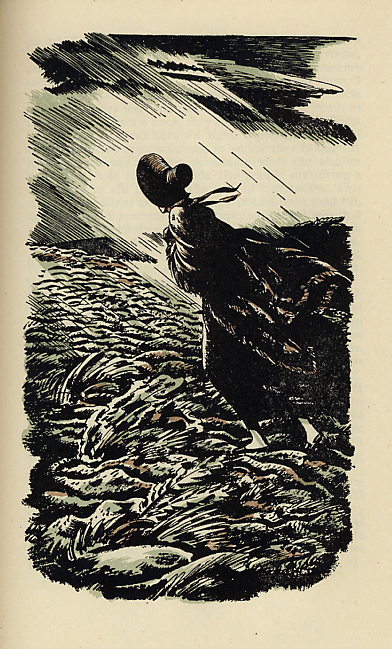
Her story carries her from the cold neglect of Gateshead and the strictness of Lowood to the grandeur of Thornfield Hall and the quiet refuge of the moors. Each place becomes a lesson. When she finally refuses a life that would cost her conscience, Brontë gives us one of literature’s purest portrayals of integrity: trembling, humble, and absolutely sure.
Critics like Harold Bloom call Jane “a moral realist in a world of wishful dreamers.” That realism—firm, faithful, and unadorned—is what makes Jane Eyre feel timeless. It is not a tale of rebellion, but of righteousness.
Why Jane Eyre Still Speaks to the Modern Reader
For the Mother as Reader
This is not a book to rush through; it’s one to sit with. Jane teaches that peace does not come from comfort but from conviction. Her quiet courage retrains our hearts toward steadiness in seasons of strain. Reading her story is a gentle act of discipleship for the intellect and the soul.
For the Home as Classroom
Brontë’s novel lends itself to a beautiful, integrated study across the arts and sciences of the home. You can explore it slowly, a chapter at a time, connecting every subject to virtue and wonder.
Language & Writing (The Scriptorium™)
After reading a chapter aloud, invite narration. Ask, “What did Jane value in this scene?” Older students might compose a short reflection on integrity—how Jane’s moral choice shapes the story’s outcome.
History & Geography (The Chronos Project™)
Map Jane’s journey from Gateshead to Thornfield to Moor House. Place her story within nineteenth-century England—an era of industrial change, moral reform, and questions about education and class. Discuss how those realities shaped her opportunities and worldview.
Art & Observation (Ars Gratia Artis™ / Theoria Naturae™)
Sketch Thornfield Hall before and after the fire as a symbol of renewal. Paint a moorland landscape using gentle tones of gray and green. Study the light—where it falls, what it reveals, and what remains hidden.
Logic & Character (The Ars Cogitans™)
Trace one of Jane’s moral decisions—such as her refusal to marry for convenience—and chart the reasoning behind it. What arguments are presented? Which is strongest, and why? This teaches moral reasoning through literature rather than lecture.
Music & Atmosphere (The Melos Project™)
Play a gentle Romantic-era piano piece while reading—Chopin or Mendelssohn—to capture the novel’s introspective mood. Discuss how music conveys feeling without words, and how self-restraint can be beautiful rather than cold.
In fact, check out this unique Amazon playlist created just for you entitled Thornfield Hall: Music from Jane Eyre’s Era.
Faith & Reflection (Corpus Vitae™)
Reflect together on this verse: “Wisdom is the principal thing; therefore get wisdom: and with all thy getting get understanding.” (Proverbs 4:7, KJV) Ask how Jane’s wisdom grows—not in comfort, but in self-control, forgiveness, and trust in divine order.
Through these quiet, connected lessons, Jane Eyre becomes more than a novel—it becomes a living portrait of vocation and virtue.
The Provision of Integrity
Jane Eyre reminds us that conviction and grace are not opposites. True freedom, Brontë teaches, is the courage to do what is right even when no one sees.
In an age of noise and comparison, this story restores the rhythm of peace: faithfulness in the unseen, integrity without applause. It is a novel that steadies the soul and strengthens the reader for real life.
Place Jane Eyre on your Legacy Shelf as a companion in discernment—the story of a woman who learned to stand firm with grace.
Continue your own journey toward peace and clarity in teaching. Download The Classical Confidence Master Scope™, a free resource that shows you exactly what matters—and what doesn’t—in a classical education.


Be the first to comment