How to Homeschool Kindergarten Without Buying Curriculum
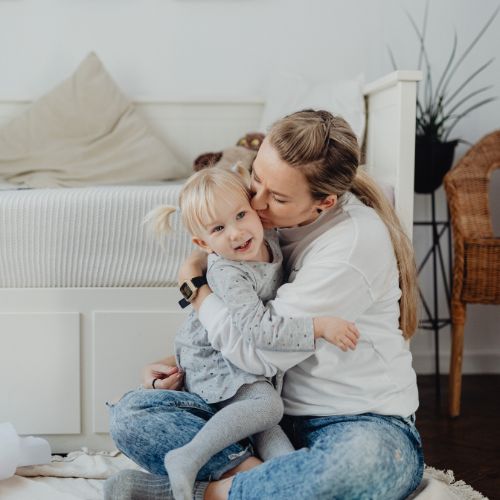
Choosing to teach your child at home often carries a quiet bravery—especially when the pressure to purchase a full boxed curriculum grows louder each year. Many mothers assume that homeschooling kindergarten requires stacks of workbooks, scripted lessons, and expensive programs. Yet history, Scripture, and classical tradition whisper a gentler truth. The earliest years were never meant to be driven by curriculum. They were meant to be shaped by presence, rhythm, and wonder.
For mothers wondering whether it is truly possible to homeschool kindergarten without buying curriculum, reassurance is needed more than strategy. Not only is it possible, it is deeply aligned with how young children are designed to learn. The kindergarten year is not a proving ground. It is a threshold. And thresholds are meant to be crossed slowly.
Kindergarten Begins With Atmosphere, Not Materials
At the very beginning of the Grammar Stage, children learn through naming, noticing, listening, and delighting in the world God has made. During this season, education does not begin with lesson plans. It begins with atmosphere.
“And he said unto them, Come ye yourselves apart into a desert place, and rest a while” (Mark 6:31, KJV).
That invitation sets the tone for the entire year. Kindergarten thrives in an unhurried home where the child feels safe, seen, and gently guided. Long before a pencil is held correctly, a child absorbs tone. Long before letters are mastered, she learns whether learning feels peaceful or pressured.
Charlotte Mason’s reminder that education is “an atmosphere, a discipline, a life” was never meant to burden mothers with systems. Her words were meant to free them. When the home is ordered, affectionate, and attentive, it becomes the classroom without effort.
What Kindergarten Actually Requires (And Why It’s Less Than You’ve Been Told)
Much of the anxiety surrounding kindergarten grows from misunderstanding what matters developmentally. Young children are not designed for volume. They are designed for formation.
At this age, learning unfolds through lived experience. Language grows through hearing and repeating. Letters become familiar through gentle exposure. Numbers take shape through counting real objects. Stories form memory when they are heard aloud and retold simply. Nature invites attention. Hands learn through making. Scripture and poetry settle into the heart through repetition. Short directions train obedience. Beauty shapes taste.
None of these require a purchased curriculum. Every one of them grows naturally in a home where attention is protected and rhythm is steady.
When kindergarten is reduced to worksheets, something essential is lost. Early learning is meant to be relational before it is academic. Attention must come before output. Peace must come before mastery.
“And all thy children shall be taught of the Lord; and great shall be the peace of thy children” (Isaiah 54:13, KJV).
A Gentle, Curriculum-Free Kindergarten Rhythm
Opting out of curriculum does not mean opting out of structure. It simply means shaping the day by rhythm rather than rigid planning.
A peaceful kindergarten morning often begins with a brief gathering—Scripture read softly, a short prayer spoken simply, the day anchored in calm. From there, a good story read aloud invites attention, followed by a gentle narration offered in the child’s own words. Sound play weaves naturally into the morning as syllables are clapped, letters traced in the air, or familiar sounds noticed in conversation.
Numbers appear through real life rather than worksheets. Counting happens while setting the table or baking. Measurement appears in cups and spoons. Order emerges through sorting and comparison. Later, time outdoors allows the child to notice light, weather, animals, and change. Art, music, and unstructured play fill the remaining spaces.
None of this is filler. All of it forms the habits that future learning depends upon.
Unstructured play, in particular, is not a break from education at this age. It is the laboratory of childhood. Through play, children rehearse language, order, imagination, and problem-solving long before they can explain what they are doing.
Teaching Reading Without a Program
One of the most persistent fears mothers carry is the belief that reading cannot be taught without a formal curriculum. Yet long before packaged programs existed, children learned to read through listening, imitation, and repetition.
Daily reading aloud, gentle sound play, noticing letters in the environment, and slowly blending simple sounds are enough. Progress comes one letter at a time. A child sees it, hears it, traces it, and finds it again throughout the day.
Reading grows best when it feels relational rather than evaluative. A child who associates reading with warmth and shared attention will move forward with far greater steadiness than one who feels rushed.
Teaching Math, Science, and the World Without Curriculum
Mathematics already lives in the home. It appears in measuring, sorting, comparing, counting, and noticing patterns. A kindergartener does not need abstraction yet. Real objects in the hands teach number far more effectively than symbols on a page.
Science begins the same way. Attention comes first. Raindrops traced on a window, shadows noticed in the afternoon light, birds gathered on a wire, leaves changing through the weeks—these moments form the scientific mind.
History and literature enter naturally through story. Scripture narratives, folktales, fables, and family read-alouds shape moral imagination long before timelines matter. Story is the natural language of childhood.
Even Christ “increased in wisdom and stature” (Luke 2:52, KJV)—not through acceleration, but through faithful, embodied growth.
Why a Curriculum-Free Kindergarten Cultivates Confidence
When the pressure to purchase a program is released, something unexpected happens. The home grows lighter. The child becomes more attentive. Learning integrates into daily life rather than standing apart from it.
This approach does not delay education. It strengthens its foundation.
A kindergarten year shaped by rest and presence forms habits that will carry a child through later stages with greater confidence than early acceleration ever could.
A Gentle Next Step
For homes coming out of school culture—or for mothers whose hearts feel unsure—rest must come before structure.
→ Begin The Great Pause™
A free, grace-filled sabbatical designed to calm the home, reset expectations, and restore trust before formal learning takes shape.
When questions about stages, progress, or long-term direction arise later:
→ Explore the Trivium Stage Mastery Atlas™
A clear, developmental guide that helps mothers understand what truly matters at each stage—without testing, panic, or curriculum overload.
Kindergarten does not require curriculum.
It requires rhythm, rest, and a child who feels secure beside her mother.
And that provision has already been given.
“For God is not the author of confusion, but of peace” (1 Corinthians 14:33, KJV).


Be the first to comment